Category: Uncategorized

  • Publishing . . . The Second Time Around

    Publishing . . . The Second Time Around

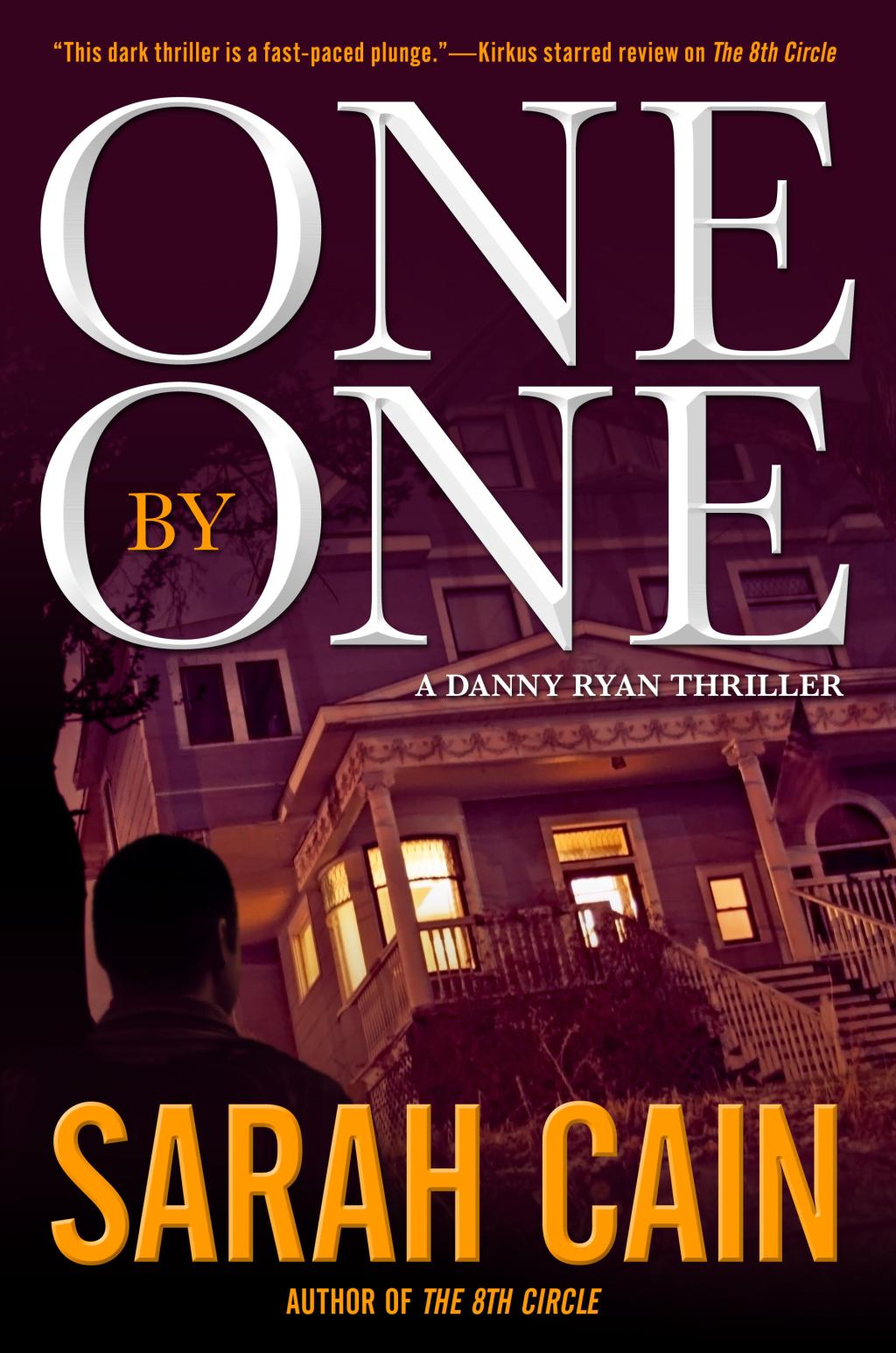
    So yes. Here it is, One By One, my latest mystery-thriller, the sequel to The Eighth Circle, my debut novel. It will officially come out in mid-March, but is already available for pre-order on the usual sites and is once again published by Crooked Lane Books.

    Writing a sequel is an interesting journey. In novels, characters have arcs. As they travel down the road of the plot, they presumably gain some insight along the way and grow in some way. So writing a sequel requires that the protagonist, especially, have a new arc and a new way to grow.

    When I first conceived The Eighth Circle, I had a very dark vision for my protagonist reporter Danny Ryan. He has lost his wife and son, and he is forced to travel a hellish path to solve the murder of a friend. In so doing he gets himself back on his feet, but it doesn’t bring him much comfort.

    In One By One, Danny faces a different sort of challenge: one that requires him to look to his past and move beyond it. He has to choose whether to step away from the wreckage of his old life and start anew or go backward.

    I tend to be a slow writer. I use a loose outline. I have a set word count that I strive for each day, but I’m never quite sure whether I’ve hit it because I go back and forth editing. (I know the manuals tell you to rip through your first draft, but I don’t write that way.) I spend time researching, which means I need to see things that are going to appear in my story (I’m a really visual learner here). Since my novels are based in Philly, I am compelled to make sure the streets are correct as much as possible (though I do use some made up places, just for fun). As for the politics that percolate in the background, even I couldn’t dream how weirdly it all ties together. Or comprehend how much more bizarre reality is than fiction.

    It’s been great fun coming up with new ways to torment and befuddle Danny in this latest offering. It’s a dark world out there. Perhaps we all need to escape into fiction.


  • Dark Night of the Soul

    After my novel, The Eighth Circle, was published the most popular question I was asked was how someone so nice could write so dark a novel.

    The most obvious answer is that I get my darkest feelings out on the page, but I think the second and more depressing answer is that I take much of my material from real life. Yes, it’s twisted and exaggerated, but a lot closer to reality than readers might expect.

    As the results from the election poured in on Tuesday night, I sat horrified. Surely it was a bad joke. Maybe there was a glitch in the system.  But no, America had elected an ignorant, misogynist, pathological liar, who had no qualifications for the most important job in the world.

    It took me a day to fully comprehend what this means, especially for women.

    For the 94 percent of black women who voted for Clinton, you once again proved that you understood better than anyone the stakes involved in this election. It’s not just a black/white issue, it’s about fairness, and nobody has been more unfairly treated than black women. They know all about carrying the load. They’ve been doing it for centuries. In 2020, I beg Michelle Obama to run.

    To the 54 percent of white women who voted for Trump, explain to me how you could tell your daughters, sisters, women who have been raped and shamed how you could vote for this disgrace of a groper who proudly called his own daughter “a great piece of ass”.

    To those who threw away your vote on the third party candidates in this most important election of all elections, thanks guys. You helped elect a monster.

    To the republicans, you have all the power now. You have no one to blame but yourselves. And guess what, over the past 40 years the economy has always performed more poorly under republicans than democrats. Not opinion. Fact.

    The world is watching us in horror. Don’t believe it? Stop listening to Fox News, get off Facebook and try reading an International Paper for a change. Read The Guardian, Le Monde, The Irish Times.

    I couldn’t have imagined a darker scenario than this.


  • Bopping at Bouchercon

    Bopping at Bouchercon

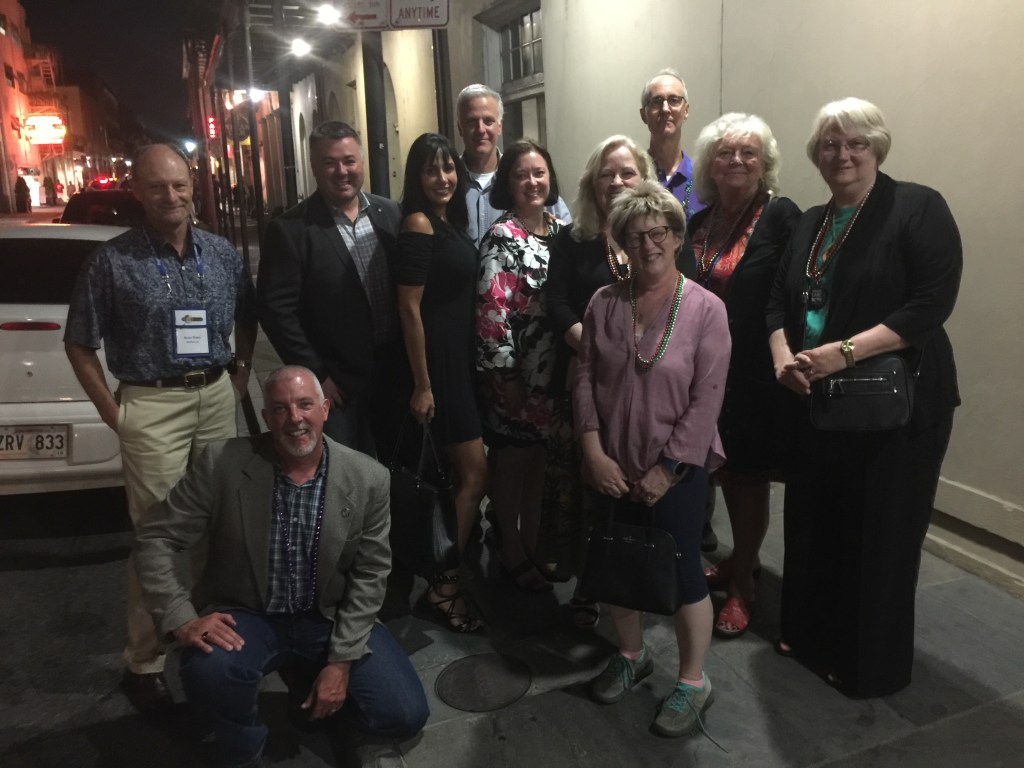
    Bouchercon just wrapped up on Sunday in New Orleans. It is the big conference for crime writers and fans of the genre, and Nola is a most appropriate setting. There is nothing like strolling through the French Quarter, taking in the fabulous architecture, the voodoo shops with their masks and beads, and the array of amazing restaurants. And the music–oh yes, there is that wonderful music.

    Nola a place that has known the infinite heartbreak that came back from the devastation that was Katrina. Life here has changed for many, but at its core, Nola is the city that seems to carry on, no matter what. It celebrates life in all its phases. It casts a spell that lets the mind wander from the rooms behind those romantic iron balconies to the dark allies behind the brightly lit bars.

    As writers, isn’t that what we are trying to do?

    Alice Hoffman once wrote that “books may well be the only true magic.”

    Writing a novel is just the beginning.

    That’s why Nola was a  particularly good spot for Bouchercon. In between the parties, there was a lot happening at the conference. There were many panels to see that covered a wide range of topics from Diversity to Changing Trends to The Pleasure and Pressure of Being an Author. (Ask me about that last one, I was on it.) There were book signings, casual conversations, and so many opportunities to just meet people and talk.

    I got to meet such luminaries as Heather Graham, Harlan Coben, and Michael Connelly, and hang out with fellow Crooked Lane authors, especially Margaret Mizushima, whose new novel Stalking Ground debuts this week, Cate Holahan, whose second novel, The Widower’s Wife came out in August of 2016, and Carrie Smith, who authored Silent City and its forthcoming sequel Forgotten City. But I also got to meet mystery fans from all over the country.

    It was all great fun. Some writers are extroverts, but a great many of us are natural introverts, so I think it’s good to get out there and mix. Writing is tough. Every writer I met had horror stories about book signings where no one showed up, horrible Amazon reviews, or just feelings of loneliness. Every writer stressed the importance of developing a tough skin, of putting on a mask.

    Maybe New Orleans is the perfect writer’s city. Every day, we pull ourselves together, put on our writer’s masks, and get to work. But once we’re done, well, actually, we’re never done.

  • Who’s Afraid of . . . ?

    Who’s Afraid of . . . ?

    Featured imagehttps://www.facebook.com/SarahCainAuthor?fref=photo

    What scares you the most?

    If you’re like most Americans, it’s public speaking according to the Washington Post. A study of American Fears by Chapman University, ranked public speaking number one. This ties in with a poll done by the Australian Broadcasting Company that ranked social phobias as the number one fear world wide. Yet polls done by Fearof.net, Yahoo, Thetoptens.com place spiders as our number one fear.

    I am not in love with spiders, though I appreciate their role in the environmental chain and their efficiency in killing mosquitos. Still, there is something startling about waking up in the middle of night to go to bathroom only to find a fat, black spider waiting for you in the sink. I live in the woods. We get spiders. I’d much rather give a talk than face a room filled with spiders, but I digress.

    I looked over a variety of surveys and compiles a very unscientific list of the top fears. Some are pretty obvious, but a few are quite fascinating.

    1. Social phobias (including Xenophobia or fear of strangers). This disorder can become so crippling that people who suffer from it will not eat or talk in front of strangers.
    2.  Arachnophobia – Fear of spiders.
    3.  Ophidiophobia – Fear of snakes. Scientists believe this may be hardwired into people because early hunter/gatherer societies had to be wary of snakes as they foraged for food sources.
    4. Agoraphobia – Fear of open spaces. People with this disorder may become so panicked at the thought of leaving their homes that they become physically ill.
    5.  Acrophobia – Fear of heights. Some scientists believe fear of heights is related to fear of the edge. People with this fear typically perceive buildings as being taller than they actually are.
    6. Claustrophobia – Fear of enclosed spaces. Elevators can wreck havoc for people afflicted with this fear.
    7. Aerophobia -Fear of flying. It’s not just the title of a book. Many people would rather drive than take to the skies.
    8. Cynophobia – Fear of dogs. Man’s best friend generally ranks surprisingly high on most fear lists.
    9. Astrophobia – Fear of storms. Given such storms as Katrina and Sandy, perhaps this is not such an unreasonable fear.
    10. Tyctohylophobia – Fear of the dark. Scientist believe this fear may be linked to insomnia. Approximately half of insomniacs suffer from fear of the dark as opposed to a quarter of non-insomniacs.

    Just missing the top ten but very close are:

    1. Typophobia – Fear of holes (as in Swiss cheese or bee hives). Strange but true.
    2. Coulrophobia – Fear of clowns. Steven King tapped into something very real.
    3. Mysophobia – Fear of germs. This phobia may tie in with Obsessive Compulsive Disorder.

    It seems the more television you watch, the more fearful you will be. Or perhaps more fearful people watch television. You never know. Also, Americans are more afraid of clowns than ghosts, but they fear zombies even more. Worldwide, clowns still win the fear factor.

    So, what scares you?

  • Remembering Shirley Jackson

    One of my favorite authors is the late Shirley Jackson, author of the The Haunting of Hill House, We Have Always Lived in the Castle, and of course, the unforgettable short story, The Lottery. Although technically classified as a horror writer, Jackson had a genius not for creating blood guzzling monsters or glittery vampires, but for seeing the horror in everyday life. She explored what happened to people who were locked into convention, no matter how horrifying (The Lottery), and she looked at souls who were on the outside of the social norm, social and psychological outcasts (The Haunting of Hill House, We Have Always Lived in the Castle).

    She did so in a cool, almost detached manner. Her short stories, in particular, took place among mostly ordinary people living regular lives, with just a hint of darkness creeping in at the borders, and she had a unique talent for uniting the hilarious with the ominous.

    Born in San Francisco, California in December, 1916 , Jackson and her family moved to Rochester, New York where Shirley attended Brighton High School  and received her diploma in 1934. She went on the the University of Rochester before relocating to Syracuse University where she wrote her first short story “Janice” and graduated in 1940.

    It was at Syracuse she met her future husband literary critic Stanley Edgar Human. While on the surface Shirley Jackson lived a quiet life as a housewife married with four children in Bennington, Vermont, she was a heavy smoker who struggled with obesity and a variety of neuroses. She died in 1965 of heart failure.

    Shirley Jackson has influenced writers from Neil Gaiman to Steven King, and as we remember the fiftieth anniversary of her death and prepare for the hundredth anniversary of her birth, it’s fitting to remember that she believed life “is a happy, irrational, rich world, full of fairies and ghosts and free electricity and dragons and a world beyond all others, fun to walk around in. All you have to do–and watch this carefully, please–is keep writing. As long as you write it away regularly, nothing can really hurt you.”

    Wise words from a wonderful writer.

  • So You Want To Write A Book

    Every since I’ve gotten my book contract, writer friends have asked what the secret is to getting an agent.

    I’d like to tell you there’s a secret formula for writing a perfect query letter or giving the perfect pitch, but there really isn’t. I know there are agents who will post query letters that they loved on their sites, and there are any number of books on the subject of how to write the perfect query letter. You can distill your book down to a perfect sixty-second pitch. (Yes, I did say sixty seconds.) But the fact is, if you don’t have a compelling story, your book won’t sell.

    Agents are looking for books they can sell. It isn’t personal. An agent might like your book, but if she knows she can’t sell it, she isn’t going to take it on. Most agents receive hundreds of unsolicited queries a week, so if you are querying, try to make sure you spell the agent’s name correctly and do your research on the kind of book he or she represents. It doesn’t guarantee you’ll get read, but it will put you ahead of a great many who do query.

    It sounds grim. Well, in some ways it is. more books are being published than ever before, but more people are writing books than ever before. That means if you want to get considered by an agent, you also have to work on your manuscript and make it shine. If you aren’t a writer by trade, I strongly suggest hiring a developmental editor to go over your manuscript.

    However, one of the best things you can do for yourself is find a writers group. I love writers groups because the afford you the chance to network, and the more people you meet, the more connections you make. This is important on a lot of levels. Connections help you form your network, but more basically they connect you to other writers. You’ll meet up and bond with writers who like the same things you do whether it be Doctor Who or True Detective or my personal favorite, Sharknado. Of course you can do this on the Internet too, but it’s nice to put a face to the name so that when you’re embarking on your next Sharknado marathon you can tweet with each other about the awful–I mean awesome acting and special effects. Maybe you’ll connect with a great critique group or one person who will be a fantastic writing partner. This most important thing is you can find someone to give you support when you get rejected the first, second, and fifteenth time. And celebrate when you finally get that yes.

    Another plus, most groups have speakers in the form of published writers, agents, and editors come to speak, and these are people you need to hear from.

    Maybe you are the kind of person with the internal drive and commitment to just keep plugging and pushing until you break through. Maybe you don’t care about traditional publishing and figure you’ll go the self publishing route. Either way it’s so helpful to be part of a group.

    Writing is a very lonely profession. You labor in front of your computer screen and send off your queries and pages and hope. You go to writing conferences and rehearse your pitches until they are perfect. The sad fact is that we deal with rejection until we suddenly don’t. And that makes it worthwhile.

    Good luck!

  • A Grave Throught

    I went to a funeral yesterday. The deceased was the wife of my husband’s friend–a very lovely woman–but in truth, I barely knew her.

    Over the course of my life, I’ve attended more than my share of funerals. In fact, my daughter once observed that our family only went to funerals, never weddings. It’s not exactly true, but it’s close.

    For obvious reasons, funerals generally stick to a specific theme. The deceased was a wonderful person who filled the world with love, and though they are gone. They have left little love bits in the hearts of all who knew them. Every person who crossed the deceased’s path has been blessed with a love bit and should rejoice.

    The question is: Should we really rejoice? Are funerals really supposed to be happy events?

    Are we really supposed to take something sad and put on a happy face?

    Sometimes I think it would be better to put on the black garments and just let the wails loose. That’s the way it used to be. You acknowledged the terrible loss, you didn’t pretend it was a joyful passing. Way back in time, people hired professional mourners, rent their garments. It was a spectacle.

    I’m not suggesting that we rip up our little black dresses. Actually, today a lot of people don’t wear little black dresses to funerals. Casual dress seems to be the fashion. I still go formal, as does my husband (dark suit, white shirt, dark tie), but we’re old fashioned. It just seems that funerals are a way to let our emotions out. To be real with one another.

    When my mom died twelve years ago after her long struggle with lung disease, I knew deep down that she was no longer in pain and for that I was grateful. Mom had always been such an active, outgoing person, and being confined to her bed was torture. At the same time, I couldn’t celebrate her passing. I missed her. We were close, and losing her was like losing a piece of my heart. It took me time to recover. No platitudes about it being a happy day made me feel better. The only thing I wanted to hear was, “Yeah, this totally sucks. I’m sorry.”

    Fortunately, I did hear that. From my friends and family. From the kids she’d taught (she’d been a teacher for twenty-three years). I got notes and letters after she died from people telling me how sad they were that she was gone.

    I needed to hear that. Somehow knowing that her passing was a loss to others made me feel less alone.

    Funerals are tough whether you want to make it a celebration, or you just want to mourn the loss of a loved one. There’s no right or wrong way to do it. That’s why I’ve decided when I go, I want to forego the funeral completely. Put my ashes in a box and throw me out to sea, put me in a coral reef, or scatter me in the wind. Then go have a drink.

    I won’t care. I’ll be long gone.

  • Fear Factor

    When I was a kid, I was afraid of the dark. Pretty common fear, right? My mom got me a little nightlight and after a while I got over my terror. (All right, so I was in college, but I did get over it.)

    I also believe if I was bad, when I got into the shower, it would zip me straight down to hell. (Hey, I was a product of Catholic schools.) I got over that fear very quickly, especially after my parents installed a glass shower door in my bathroom.

    As I got older, I began to realize I have a terrible fear of heights. I’m not afraid of flying, but rooftops make me queasy. I love roller coasters, but no Ferris wheels, thank you. ( I know, it doesn’t make sense to me either.)

    Fear is an interesting emotion. As a thriller writer, I revel in fear. yet that same emotion has also been my biggest stumbling block.

    Maybe you know what I mean.

    You write a story but don’t send it out. You see that there’s a critique group forming nearby, and you’d really like to join, but you just can’t make yourself do it. Or worst of all, you let your ideas pile up in your head because you think they’re too silly to write them down.

    So what’s holding you back?

    Writing is a tough profession. No question. There will always be someone somewhere who hates your story. It’s just the way life is. But you can’t let it stop you. So every day you have to push yourself to do the thing you’re afraid of no matter where you are on your writing path. It may not get easier (sorry), but sometimes it’s great to stand on that very high rooftop and shout, “I did it” even and, maybe especially, if your knees are shaking.

  • Details Are Everything.

    MarLodgeCeilingThe photo above is of the ballroom of Mar Lodge estate in Scotland. It’s beautiful, isn’t it? You can almost imagine some fairytale figures–maybe Beauty and the Beast–twirling around the ballroom floor under the lights, and vines, and wait–take a closer look.

    MarLodgeCloseUpHmm. Maybe a little more like something out of the first season of True Detective–missing you, Matthew McConaughey and Woody Harrelson–where the Yellow King might hang out. Still an amazing room in a beautiful place, but just a touch more creepy. And yes, I know this room is a celebration of culture, but hey, I write thrillers.

    It doesn’t take much for my mind to travel to dark, creepy places. Sometimes if I’m taking a walk along say a river bank, I’ll see a spot where I think a body might wash up and snap a photo. I try to pretend I’m being artistic, but my family knows I’m just trying to get the details right. If you’re going to murder someone (in the literary sense), you need to get the details right. You owe it to your readers. That and a certain creep factor.

    You don’t have to go to Mar Lodge to find creepiness in every day life. Your own backyard will do. It’s all in the details.

  • Just Revise And Watch the Exploding Fish

    I’m in the middle of preparing my debut novel, The 8th Circle, for publication, a fascinating process that involves revision.

    Oh yes. I did use the R word. After you have polished and polished your manuscript, maybe had it critiqued or edited and polished some more until you finally feel marginally confident that you have something acceptable, and you have secured an agent, and the agent has secured a book contract, an interesting process begins where the editor tells you how much he/she loves your manuscript and asks you to make a few revisions, which turn out to be rather larger than you thought.

    This is not a complaint about the revision process, which continues two or three or more times. It’s a blessing to have an editor who cares enough about your manuscript to want you to make it better. Especially today. If F. Scott Fitzgerald hadn’t had Max Perkins, he might have penned The Notable Gatsby or possibly just Gatsby. In all probability it would not have been The Great Gatsby. This is why we now have the great controversy over Harper Lee’s Go Set A Watchman, which most likely was an early draft of To Kill A Mockingbird that Ms. Lee never intended to be published.

    I cringe to think of anyone reading my early drafts.

    The point is you write drafts and revise them because that’s really how you learn to write. You can take classes on craft and plot and character building, but in the end you learn to write by writing and revising. If you can’t look critically at your own work and take constructive criticism about that work, you aren’t going to improve.

    Sometimes it’s tedious. Sometimes it’s fun. Sometimes you want to rip your hair out. At that point, I suggest watching a ridiculous movie. I’ve already recommended Sharknado. Have you tried Mega Piranha? The fish explode. It’s awesome.